Monday, August 22, 2005

Shameless plug


Once again, my two favorite blog carnivals are fired up and running today.

The Carnival of Personal Finance is a weekly collection blog entries about, well, personal finance. Check it out at Frugal for Life and read all of the great entries.

Strange Brand has all of the Carnival of the Capitalists entries. I tried to pick a few favorites but it's going to take all week just to read them all.

Sunday, August 21, 2005

Garage doors and financial planning


Shortly after moving into our first new home we decided that electric garage door openers were an affordable luxury, especially if I installed them myself. After all, the box did say "Installs easily in an afternoon". Well, complications arose and the weekend was wasted trying to get them to work properly. I finally caved in and hired a professional who had them working beautifully in 30 minutes and for 50 bucks. The lesson: There is great value in hiring qualified professionals.

As I am not always the best student, this lesson was repeated to me a couple of short years later in the form a plumbing project gone bad. Trying to save a few bucks on a plumber resulted in a day without running water and a $500 repair bill. Life would have been so much simpler and cheaper in the long run had I just hired a professional from the start.

Shouldn't this same principle be applied to money and investing? And if so, why do so many middle-class Americans opt to go it alone when it comes to financial planning?

An article in the August issue of Southwest Airlines Spirit Magazine (not available online) titled "Equal Opportunity Planners" suggests that many don't seek out professional financial planners because they are embarrassed.
Concerns are shared by many Americans who need financial planning help, but who believe that financial planners won't go near them if they're not already wealthy. For families that barely sustain their lifestyle, the idea of a financial planner may seem even laughable. Many middle-income people either do no planning at all, or try to do it themselves. The results of such efforts can range from disappointing to disastrous.
More plausible reasons for bypassing professionals are the issues of trust and value.

Much of the mistrust in financial professionals has been brought upon them by the industry itself. A long history of fraud and abuse by a very small minority has scarred the profession. It's important to note that these occurrences, while they generate big headlines, are actually quite rare.

The value a qualified expert can add is immeasurable but the popular financial media has convinced Americans that they should never pay for financial advice when all they need is to do a little research on their own. While always important to do some of your own legwork, it's impossible for an individual to stay abreast of tax law changes, global economic developments and new investment opportunities the way a professional can.

As with garage door openers and plumbing projects, be sure to consider all possible outcomes when deciding whether to work with a financial professional. You might be surprised.

Friday, August 19, 2005

Who needs tort reform?


Vioxx, the trade name of the generic drug rofecoxib, was approved by the U.S. Food and Drug Administration (FDA) in May 1999, for the treatment of osteoarthritis, menstrual pain and the management of acute pain in adults. On September 30, 2004 the manufacturer of Vioxx, Merck & Co., Inc. (Merck) announced that it was voluntarily withdrawing Vioxx from the market worldwide, due to increased risks of cardiovascular problems (including heart attack and stroke) in users of the drug.
In May of 2001, Robert Ernst, a 59 year-old Wal-Mart produce manager from Texas, died in his sleep from arrhythmia after having taken Vioxx for eight months to relieve arthritis symptoms in his hands.

Today, a Texas jury found Merck liable and awarded Ernst's widow $253.4 million in damages, certain to increase the number of Vioxx-related suits against the drugmaker exponentially. There are already 4,200 filed.

While certain to be appealed and the award lowered, consider that attorneys in suits such as this typically take 40-50% after reimbursements for expenses.

These lawsuits-gone-wild are precisely the reason George W. Bush has urged Congress to pass some sort of meaningful tort reform. While drugmakers and all manufacturers need to be held liable for defective products that cause harm, absurd monetary awards do nothing but build personal wealth for attorneys (John Edwards' net worth has been estimated as high as $60 million), stifle innovation and create a lottery mentality for anyone who so much as gets a splinter from a broom handle. The costs are ultimately borne by all consumers and, in the case of prescription drugs, the biggest consumers are the nation's elderly.

Thursday, August 18, 2005

WSJ recognition for personal finance blogs


In Thursday's edition of the Wall Street Journal, Andrew Blackman discusses the proliferation of the blogosphere in general, and most interestingly, the growth of personal finance blogs.

Blackman singled out six blogs-of-note and three of them I visit regularly--All Things Financial, Consumerism Commentary and Free Money Finance. Congratulations gentlemen!

Sunday, August 14, 2005

OJ, pensions, ERISA and golf


Eight years after the families of Nicole Brown Simpson and Ron Goldman won $33.5 million judgments against O. J. Simpson, many are still scratching their heads that Simpson is living lavishly while much of the award remains unpaid. How can this be?

The answer is that O. J. had some pretty smart financial advisors. During his years as an NFL star and advertising pitchman, Simpson built up hefty sums in his NFL pension and personal pensions set up through various companies he established. Then he left the money inside the defined benefit plans rather than rolling it into an IRA where he may have had more flexibility with investments. Today he draws $25,000 per month from the NFL pension alone.

The Employee Retirement Income Security Act of 1974 (ERISA) states that employer retirement plans including all types of defined benefit plans "may not be assigned or alienated." The Browns and the Goldmans can't touch O. J.'s pensions.

Despite the Simpson case, it is in society's best interest to protect retirement assets from judgments and other creditors. With an already dismal national savings rate, further discouraging participation in retirement plans wouldn't be in the country's best interest. But ERISA and the subsequent 1992 Supreme Court case, Patterson v. Shumate, extended protection only to ERISA plans. IRAs, Roth IRAs, SIMPLE IRAs, SEPs, etc. were not protected.

Finally, the courts and congress have moved to extend protection to nearly all forms of retirement accounts. On April 4th of this year the U.S. Supreme Court ruled in Rousey v. Jacoway that IRAs are "similar plans" and deserved the same sort of protection afforded to ERISA plans.

Additionally, The Bankruptcy Abuse Protection and Consumer Protection Act of 2005 (BAPCPA), signed into law on April 20, 2005, and effective on October 17, 2005, has substantially increased and simplified bankruptcy creditor protection for retirement accounts. Virtually all retirement accounts will now be exempt assets in bankruptcy proceedings.

One last word about O.J.--Simpson chooses not to work since any earned income would only be seized by the court. So he is forced to play golf every day...something's just not right.

Saturday, August 13, 2005

Busy


All right, so I've been away from blogging for a bit. I've been busy.

I traveled back to the Midwest for a week to get the folks moved into their new assisted living apartment and to get the family home of 46 years ready to market. Mom and Dad are settled in and things seem to be OK so maybe I can stay home for awhile.

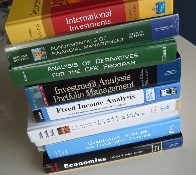
I have also launched a new project. I'll be taking a little quiz in early December over the content of these books, so much of my free time will be devoted to study. Wish me luck.

Tuesday, August 02, 2005

Financially handicapped?


In a post last week I discussed my observation of an inordinate number of handicapped placards on cars parked in metered spaces near my office building and surmised that something was amiss. You see, in this city, where parking is very expensive, a handicapped placard excuses one from having to feed the parking meters.

In the past week I've tried to be vigilant for handicapped drivers and just haven't noticed any...until today.

While out grabbing my morning java I watched a woman with her blue handicapped placard parking her Volvo wagon on the street (imagine, a Volvo wagon in the Bay Area!). Since I was in no real hurry to get back to the office, I watched. She walked from her car to my office building, a distance easily 300-400 yards. While she didn't use any sort of walker, cane or crutches, she was quite overweight and moved slowly and deliberately.

Now the interesting thing is there are at least two parking garages that are closer to the building than where she parked on the street. So if we give her the benefit of the doubt and agree that she has some disability so grave that a doctor felt, in the interest of her health and safety, that she be given special parking priviledges, then why didn't she park in one of the garages? Well, because she would have to pay to park in a garage, disability or not.

My point in last week's post was that I believe handicapped placards are abused by people who don't deserve them to the detriment of people who do and to the city's taxpayers. They are scum. My point today is, disabled or not, some people abuse them because they're just too damn cheap to pay for parking. Physically handicapped doesn't mean financially handicapped. How do people like that sleep at night?

Thrills and spills


Another week of carnival thrills is all cranked up for capitalists and aficionados of personal finance.

Carnival of the Capitalists is hosted this week by Small Business Marketing Systems. There are lots of entries and Michael Cage breaks down the whole list.

For personal finance thrill-seekers, the seventh week of the Carnival of Personal Finance is fired up at In Cash Flow We Trust. Steve Mertz is your master of ceremonies.

Ride all the rides, play all the games! Be sure to come back next week for more.

Sunday, July 31, 2005

The tax man blues


The August 15, 2005 issue of Forbes Magazine reports that performer Wayne Newton and his wife owe the IRS another $1.7 million in taxes and penalties for the tax years 1997 through 2000.
The feds say he omitted income, took improper deductions for mortgage interest, maintenance and security at his residence, and shouldn't have written off a $51,950 loss on the sale of two antique cars. In a just-filed U.S. Tax Court lawsuit with wife Kathleen, Newton, 63, said many of the disputed items were justified by a business need to maintain "an image of larger-than-life glamour, sophistication and elegance."
The "business need to maintain an image..." is what's really intriguing. Certainly Newton could argue that the persona he has created helps fill the venue for his Las Vegas shows. And while this image of flamboyance and opulence is nice, he'd really rather not live such a lavish lifestyle, but gee, he simply must. It's part of the marketing strategy.

If the U.S. Tax court buys Newton's argument, it will open the door to any professional who spends money to maintain an image. Doctors, lawyers and corporate CEOs could start deducting the costs of expensive homes and European sedans as business expenses. After all, how comfortable would you be with a neurosurgeon who drives a ten year-old Toyota Corolla or a financial advisor who lives in a run-down house in lousy part of town?

Newton, who filed for bankruptcy in 1992, puts his average annual income for the four year period at $790,000. The IRS thinks it's at least twice that amount. I wonder if he's including royalties from "Ferris Beuller's Day Off"?

Thursday, July 28, 2005

Pen and paper


More than twenty years ago, early in my first career in outside sales, a client handed me a thin brochure from Daytimer and said, "You should get one of these." It was my first exposure to a "time management system" and that pocket Daytimer was a constant companion for years.

In the 90s, when my career evolved into an office environment, I was introduced to the world of Franklin Planners. My big leather Franklin looked great on my desk and it was ten times the size of the old Daytimer. All of those different columns and boxes to write stuff in...very exciting.

The late 90s brought Palm Pilots, technology meets the to-do list. When my first one was new it was so exciting to show it off and demonstrate how quickly I could write in it. Such power in a tiny package.

But I missed writing things by hand in different colors and highlighting the important stuff. I missed drawing circles and arrows and flipping the pages. I missed seeing a whole month in writing with just a glance. So last week I ordered a new pocket Daytimer, I've come full-circle. I've tried the latest and greatest time management systems and the newest technologies and now I'm back to a pen and ink calendar that fits in my pocket. What could be more simple?

Tuesday, July 26, 2005

Lowlife


Everyday, on my walk from the parking garage to my office building, I pass a long line of parked cars and I've always been surprised by the number of them that have handicapped placards hanging from the rear-view mirrors. There aren't any hospitals or medical buildings in the area and I don't ever recall seeing folks with visible disabilities getting into or out of these cars. But you see, you don't have to feed two bucks an hour into the meter if you're handicapped, or at least have the placard.

This morning I noticed a woman hopping out of a new Chevy Trailblazer and trotting up the steps to an office building without ponying up any dough for the meter. Then I noticed the placard. Hmmm.

I decided to count. I walked past fifteen parked cars, seven had handicapped placards.

So what's the deal? Are doctors selling these things? Are people so cheap and/or inconsiderate that they resort to such a tacky and offensive behavior? Is there anything more tasteless than feigning a disability for free parking?

Monday, July 25, 2005

Carnival of Personal Finance


Today marks the beginning of Week Six of The Carnival of Personal Finance, a collection of entries from various bloggers about, well, personal finance.

My own entry follows, but two of my favorites this week are Teach Your Kids to be Smart with Money and Identity Theft...What to do about it. Check 'em all out.

Sunday, July 24, 2005

The ABCs of Mutual Funds


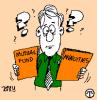
Nothing is quite so perplexing to mutual fund investors as the issues around sales charges and share classes. No-load funds and advisor-distributed funds, the alphabet of share classes and 12b-1 fees, what does it all mean?

To fully understand, let's first take a quick look at the history of mutual funds. In 1924, MFS Investment Management introduced the first mutual fund in America. Suddenly, the U.S. stock market, previously the exclusive domain of the wealthy, was within reach of the average investor. But access came with a price. Early mutual funds carried steep up-front sales charges and these "loads" remained prevalent until the mid-80s when no-load funds began to grow in popularity.

With the introduction of SEC rule 12b-1 and competition from no-load families, advisor-distributed fund families began to restructure the way they charged investors to purchase their funds.

The up-front sales charge on what became Class A shares dropped from 8.5% to 4-5.75% and Classes B and C were added by many advisor-distributed fund families.

Class B shares carry no front-end sales charge but a declining redemption fee if you sell your shares early (typically in the first six years). This is called (are you ready) a Contingent Deferred Sales Charge or CDSC. Class B shares usually carry an additional expense called a 12b-1 fee that is typically .25% to cover distribution costs. In other words, it goes to the advisor that sold you the fund.

Class C shares don't carry front-end loads either but they also don't have any redemption fee (usually after one year). They do have a much higher 12b-1 fee (around 1%) that really pushes up total fund expenses.

So, what does it all mean and which share class is best?

The answer depends on how long you expect to hang onto your fund. According to an October 2003 study conducted by Standard and Poors, Class C shares outperformed Class A shares in the 1, 3 and 5-year time frames. Class A shares outperformed in the 10-year time frame but bear in mind that, according to a 2003 study by Dalbar, the average holding period for mutual fund investors is only 29.5 months.

You could of course avoid all of this confusion completely by picking your own no-load funds and directing your own investments. You can lower your investment costs by taking a pass on the education and experience of a financial professional but this route is not for everyone, particularly if you've built a sizable nestegg that you don't wish to jeopardize by going it alone.

Saturday, July 23, 2005

International Intrigue

Fredrik Sterner is a 19 year-old student and blogger in Sweden who linked to this post of mine on Monday. This is what Fredrik said:
Ett argument for att USA inte ska yrka for hojda minimiloner finns har. Lasvart. Om det nu ar nagot som ar sa omtalat i Europa sa ar det USAs "hemska" minimiloner..
Thanks, Fredrik for your thoughtful and articulate comment. (Actually I don't have a clue what he said. Could someone please translate for me?)

Thursday, July 21, 2005

Great Uncle Roger


For as long as I can remember, Dad sarcastically referred to Mom's Uncle Roger as "the uncle with the sparkling wit and effervescent personality." My great-uncle Roger apparently was pretty dull.

I was quite young the last time I saw my late uncle and don't remember much about him. One thing I know (besides his personality) is that he was hired by William Allen White at the Emporia Gazette and worked there as a journalist for his entire career.

Now, as my parents are days away from moving out of the house I grew up in and into an assisted living center, I brought home a few treasures from my childhood home that have special meaning and should always be in our family. Yesterday I returned from Kansas with Uncle Roger's 1930s Royal Portable typewriter. It's beautiful and works like new. It's particularly special to me because I graduated from the William Allen White School of Journalism at the University of Kansas, named for Uncle Roger's employer.

I can't help thinking about the things Uncle Roger might have typed on this old Royal. This little typewriter just might have helped document a lot of history.

Tuesday, July 19, 2005

Two times the fun


Again this week there are two great carnivals loaded with terrific posts, sure to keep you entertained all week long.

The Club for Growth is hosting The Carnival of the Capitalists this week and I Will Teach You to be Rich (ya gotta love the name) has The Carnival of Personal Finance.

Be sure to get your tickets and ride all the rides.

Monday, July 18, 2005

Privacy--not the same to everyone


The Gramm-Leach Bliley Act, also known as the Financial Modernization Act of 1999 includes provisions to protect the personal information that is gathered by financial institutions about their customers. The Act requires that institutions give customers privacy notices that explain collection and sharing practices. In turn, customers have the right to limit the sharing of some information.

In yesterday's San Francisco Chronicle, David Lazarus takes a look into Fidelity Investment's privacy policy.
Deep in Fidelity's privacy policy, the company finally makes this disclosure: "If you interact with Fidelity directly as an individual investor, we may exchange information about you, as described above, with our affiliates to offer Fidelity products and services.

"We may also share this individual investor information, under joint marketing agreements with non-affiliated, financial services business partners to offer discounts or other special access to products and services."

What info are we talking about? The policy says it could include your name, address, Social Security number, birth date, assets, income, trading history and even "discussions with our customer service staff."
All this might not be so bad if a customer was easily able to "opt out" of participating in the information sharing, but Fidelity's policy to do this is not clear and a spokesperson that Lazarus spoke to wasn't much help either.

Lazarus continues by examining the privacy policy of one of Fidelity's chief rivals, San Francisco based Charles Schwab.
The San Francisco discount broker is including a form titled "Important Privacy Choice" in customers' latest statements. "You have the right to control whether we share some of your personal information," it prominently declares.
The firm's privacy policy, meanwhile, clearly states that customers "may instruct us not to share information about you with outside companies for joint marketing purposes," and also says how this can be done.
Take the time to read the privacy policies of the financial institutions that you deal with and understand what information they share and who they share it with. Clearly, not all institutions take the same approach.

Sunday, July 17, 2005

False alarm


Not much can compare to the helpless feeling you get when 2,000 miles from home and your alarm company calls your cellphone in the middle of the night to let you know that the fire department has been dispatched to your house.

Early reports are that it was a "system malfunction". But the period from first learning of the alarm until hearing from a friend calling from our kitchen phone, was just a tad rattling.

Thursday, July 14, 2005

Reunion bound


I'm on an airplane in tomorrow's pre-dawn hours, bound for the great Midwest and a high school class reunion. The laptop and digital camera will be along for the ride, so provided I have the time and a wireless connection, there could be some good blogging material (or not).

The high school that I attended (oh so many years ago) was quite large and my graduating class was over 700. We've had several reunions over the years and it seems that the same group of 150 or so keep showing up to each one. Not that I won't be happy to see that same group, but I'm kind of hoping for some fresh faces, folks I haven't seen in many years who decided, for whatever reason, to show for this one.

Since it may be a day or two or three before I'm able to post again...anyone have a good reunion story to share?

Wednesday, July 13, 2005

Spell checker

Isn't it ironic that the spell checker built into Blogger doesn't recognize the word "blog"? I'm so tickled by it that I've never bothered to have it "learn" the word.